
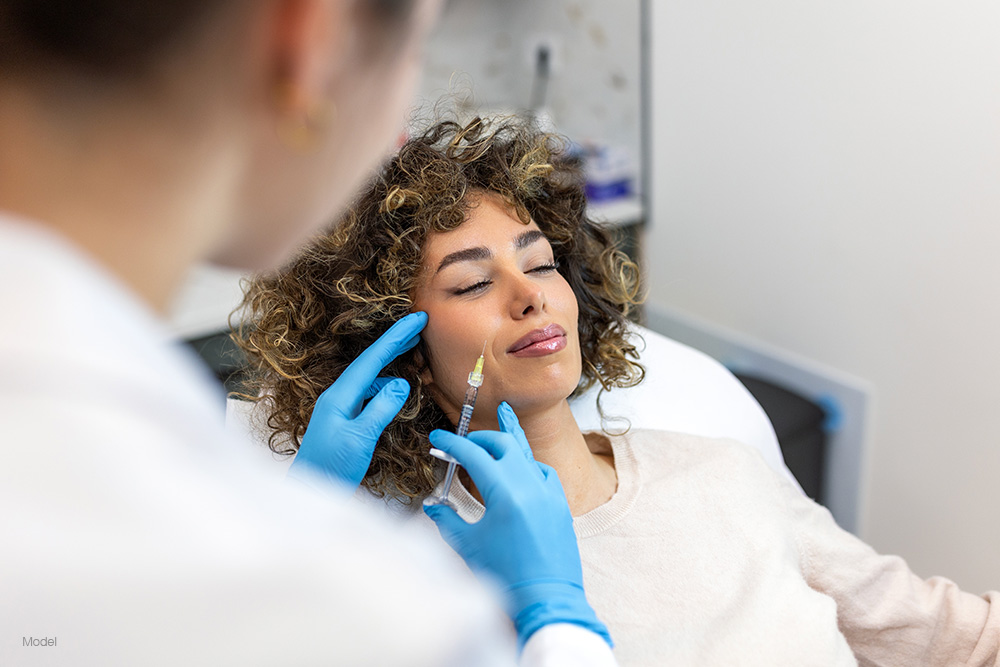
Facial fat transfer is a popular facial rejuvenation procedure that restores youthful facial volume using your own natural fat. It can improve multiple areas of the face during a single procedure while providing natural-looking, long-lasting results. This blog discusses the facial areas that can benefit from facial fat grafting.
3 Min Read:
How Facial Fat Transfer Restores Facial Volume
You may see the effects of aging on the skin’s surface, but the cause of these changes lies deep beneath it. Facial aging results from a combination of collagen loss, decreased skin elasticity, and gradual loss of facial fat. Together, these changes can reduce structural support beneath the skin, contributing to hollow areas, wrinkles, and changes in facial contours. Facial fat transfer restores lost volume beneath the skin, helping create smoother, fuller, and more youthful facial contours.
Where Does the Fat Come From?
Fat transfer is a two-step process that begins with extracting fat from another area of the body for grafting. In addition to rejuvenating the face, patients may reduce stubborn fat in areas such as:
- Abdomen
- Hips
- Buttocks
- Thighs
- Back
- Flanks
The amount of fat Dr. Kadz removes depends on the amount needed for facial grafting and your body-contouring goals. The contouring results in the donor area are permanent as long as you maintain a healthy weight.
Areas Facial Fat Transfer Can Improve
Dr. Kadz uses liposuction to remove unwanted fat. The harvested fat is carefully purified before healthy fat cells are strategically injected into selected areas of the face. Facial fat transfer can enhance several areas of the face, including the following:
Wake Up Tired Eyes
The delicate area under the eyes is particularly vulnerable to age-related changes, such as dark circles and sagging skin, that can make you look tired even after a full night’s sleep. Small amounts of strategically placed fat can soften hollowing beneath the eyes, reduce the appearance of dark shadows caused by volume loss, and create a smoother transition between the lower eyelid and cheek.
Volumize Hollow Temples
Volume loss in the temples can create a hollow appearance and alter facial proportions. Fat transfer restores fullness for a softer, more youthful contour.
Smooth Facial Creases
Wrinkles caused by collagen loss include the deep creases between the nose and mouth (nasolabial folds) and lines running from the mouth to the chin (marionette lines). Fat injections can reduce the appearance of these wrinkles, creating a smoother skin surface and refreshing your appearance.
Lift the Cheeks
As collagen decreases and facial volume changes over time, the tissues of the midface become less supported. Gravity gradually acts on these tissues, contributing to flattening of the cheeks and a more sunken appearance. Facial fat transfer restores volume to the cheeks, helping create smoother facial contours and a more youthful appearance.
Define the Jawline
As facial volume decreases and skin loses elasticity over time, the jawline may lose definition, and jowls can develop. Strategically placed fat can enhance jawline definition and improve facial balance in appropriately selected patients.
Plump Up the Lips
Whether your lips have always lacked shape and volume, or they’ve lost it over time, fat transfer can help. Small amounts of fat can enhance lip shape, create a fuller pout, and improve natural-looking volume and lip definition.
Learn More About Facial Fat Grafting in Beverly Hills
Facial fat grafting in Beverly Hills offers a natural way to restore facial volume and enhance facial contours using your own tissue. During your consultation, Dr. Bruce Kadz will evaluate your facial anatomy, discuss your aesthetic goals, and develop a personalized treatment plan designed to achieve balanced, natural-looking results.
To learn whether facial fat grafting or facial fat transfer is right for you, schedule your consultation with Dr. Kadz today. Call our office at (980) 372-5239 or complete our online contact form to learn more about facial fat grafting in Beverly Hills.